
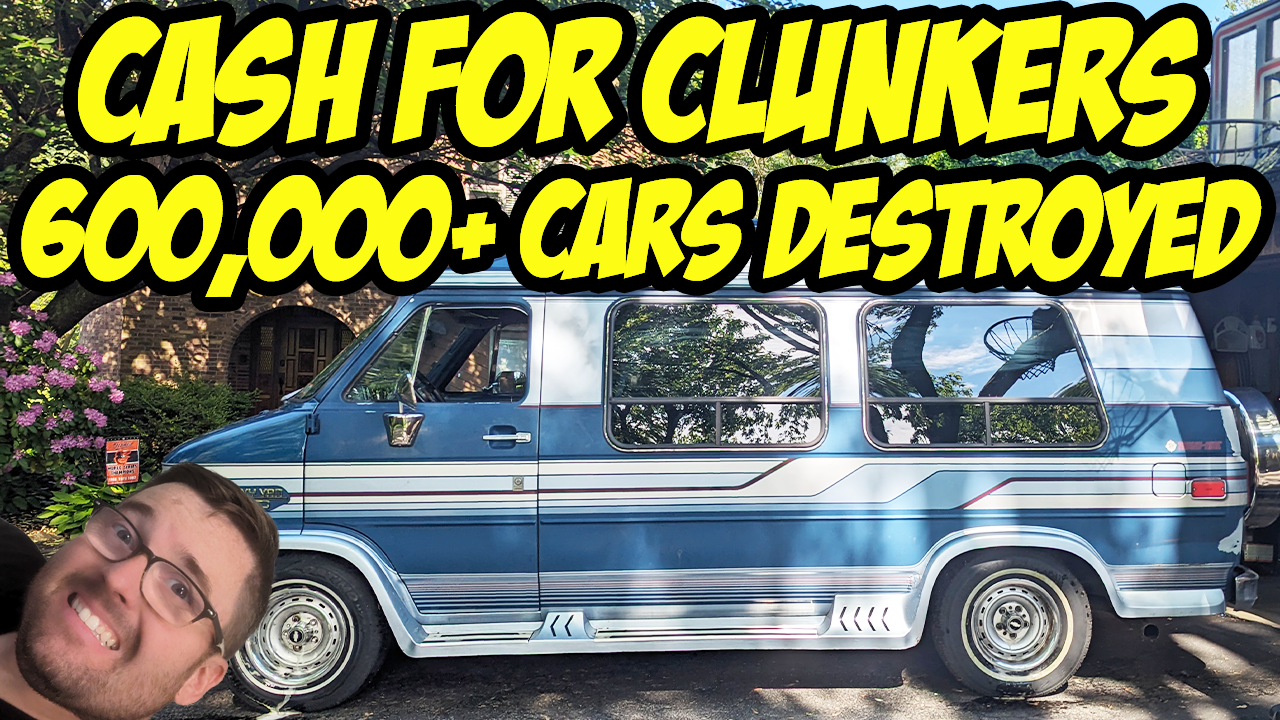
Do you recall the exhilarating “Cash for Clunkers” program? It was a government initiative that offered up to $4,500 for trading in your old, inefficient “clunker.” The aim? To purge the roads of gas-guzzling cars and jumpstart the economy. Join us as we dive into the fascinating details and explore the COMPLETE List of cars that were “CLUNKED!” Let’s rev up this discussion!
View the complete list of 600,000+ cars clunked here: https://jamz.net/the-cars-program-aka-cash-for-clunkers-remember-it-cars-destroyed/
The “Cash for Clunkers” program, officially known as the Car Allowance Rebate System (CARS), was a U.S. government initiative that ran for a brief period in 2009. Its primary goal was to promote the purchase of more fuel-efficient vehicles by providing financial incentives for consumers to trade in their older, less efficient cars.
Key Features of the Program
Financial Incentives: Consumers could receive a voucher worth $3,500 to $4,500, depending on the difference in fuel efficiency between the old vehicle and the new one purchased.
Environmental Impact: The program aimed to reduce environmental pollution by removing gas-guzzlers from the road.
Economic Stimulus: By encouraging car purchases, it aimed to provide a boost to the struggling automotive industry during the economic downturn.
Impact and Controversy
Success: The program was popular among consumers and was credited with significantly boosting car sales during its run. It led to nearly 700,000 old vehicles being traded in.
Criticism: Some critics argued that the environmental benefits were minimal because the production of new cars also generates substantial carbon emissions. Others pointed out that it disproportionately benefited wealthier consumers who could already afford new vehicles.
Legacy
While “Cash for Clunkers” was a short-lived program, it left a lasting impression on the automotive industry and policy discussions about environmental incentives and economic stimulus. Its effects on auto sales, consumer behavior, and federal policy-making are still analyzed and debated today.
