
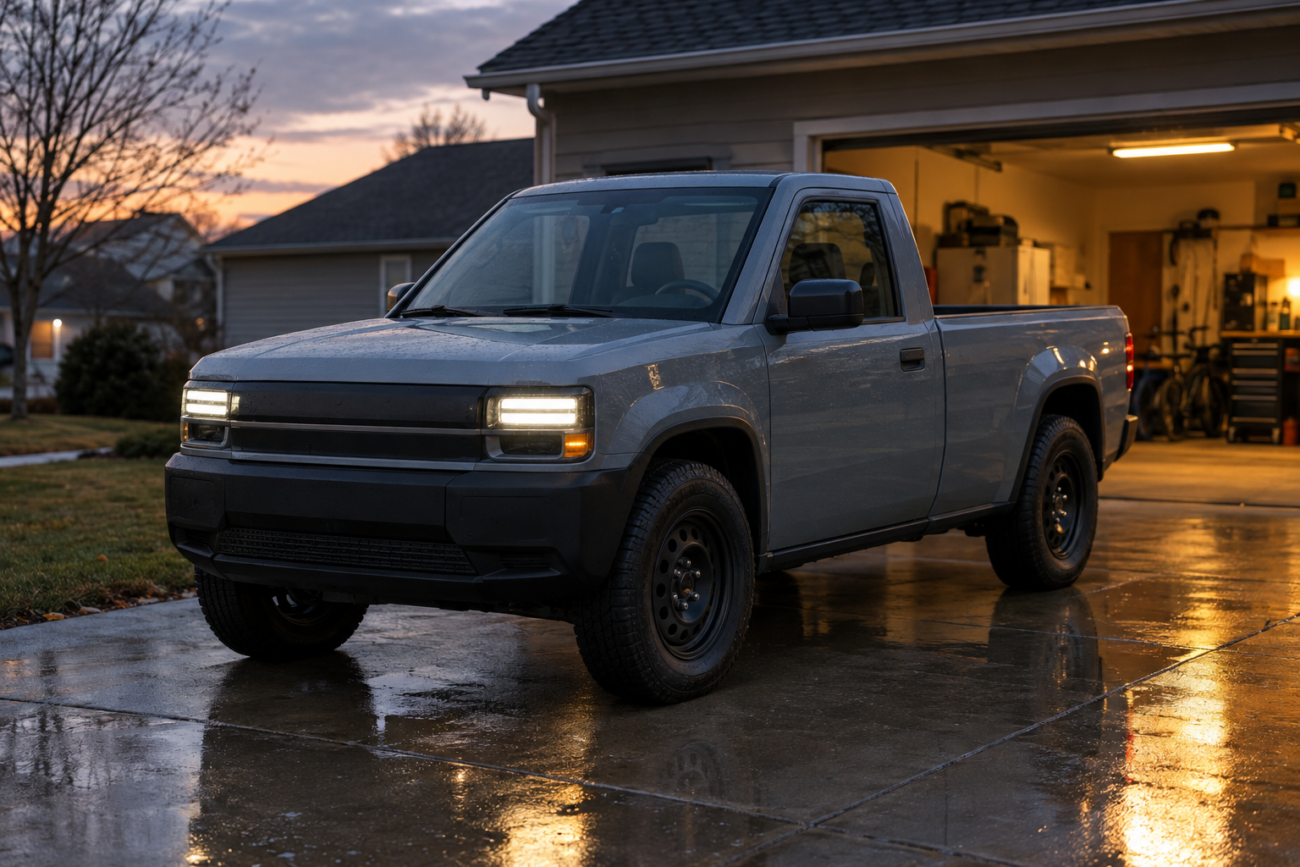
Slate Auto wants you to believe 205 miles of range is all you need. They are selling the cheapest electric pickup in America at $26,400, and they are banking on the idea that most of us do not drive very far each day anyway. The pitch sounds reasonable until you look at what that money actually gets you.
At the base price, you get a two-door electric truck with crank windows, no radio, and a key you have to physically insert into something. It is about two feet shorter than a Ford Maverick, which makes it the smallest pickup you can buy here. If you want the bed kit that adds seats and a roof so it functions more like a crossover, the price jumps to $31,400. You still will not have power windows or a stereo.
The Battery Math Makes Sense Until It Does Not
Slate went with a small battery because batteries are the most expensive part of an electric vehicle. If you want to hit a low price point, you cut capacity. The company sent out a marketing email earlier this month saying 205 miles is more than many people need each day. AAA says the average American drives about 31 miles daily, so technically you could charge once a week.
That logic works in a spreadsheet. It falls apart when you remember that nobody drives exactly the average, range estimates are optimistic, and cold weather eats into capacity. You also have to want to live with a vehicle that has the feature set of a 1990s work truck.
The Competition Is Not Sitting Still
Kia offers the EV3 compact crossover starting at $31,385 with 221 miles of range. It comes with the basic comforts you expect in a modern vehicle. Kia does not think the base model will sell much, maybe three to five percent of total volume. The mid-tier Wind trim with 321 miles of range and a $36,485 price tag is projected to move about sixty percent of their units. People will pay more to not think about charging as often.
Ford has the Fathom electric pickup on the way. It will start at $29,945 with around 250 miles of range standard and an optional battery pushing past 300 miles. That truck will have power windows and a radio and all the other things we stopped thinking about as luxuries twenty years ago.
Who Is This Truck For
Slate is backed by Jeff Bezos money, which makes the whole bare-bones aesthetic feel like cosplay. The truck asks you to embrace a kind of worker-truck purity while still paying a price that only makes sense if you are really committed to the bit. I am not convinced that customer exists in large numbers.
If you already own an EV and understand your driving patterns and you live somewhere temperate and you genuinely want the smallest possible electric truck, maybe this works. But the market for people who want to pay thirty grand for a vehicle with crank windows seems narrow, especially when rivals are offering more range and more features for similar or slightly higher money.
Slate might find its niche. Stranger things have succeeded. But insisting that 205 miles is plenty when your direct competition is launching with fifty percent more range and actual amenities feels like wishful thinking. The numbers do not lie, and neither do the people who have to live with the thing every day.
