Why the Dino 246 GTS Matters
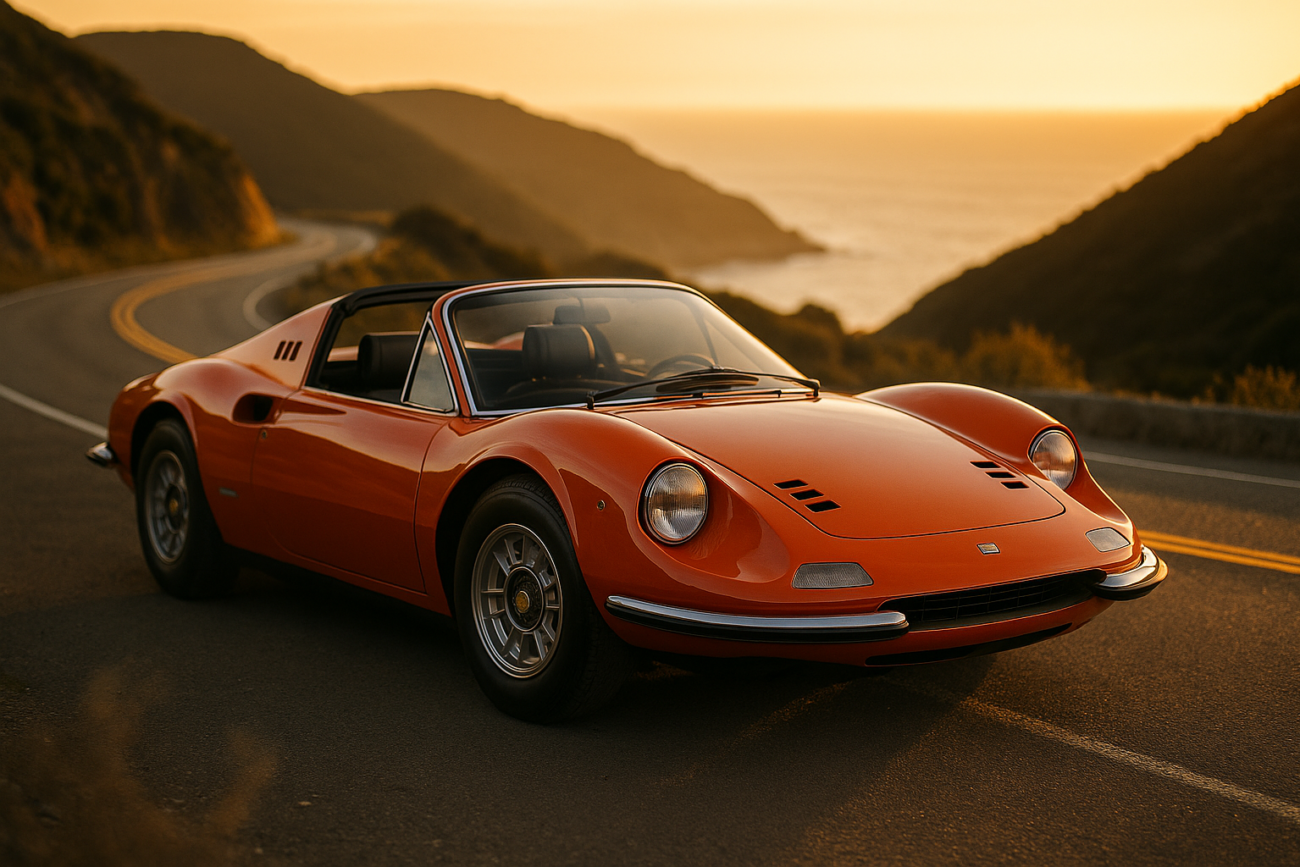
The Dino 246 GTS is the open-top version of one of the most important cars Ferrari ever built — not because it was the fastest or most powerful, but because it proved a mid-engined V6 Ferrari (badged simply “Dino,” without the prancing horse) could be one of the best-balanced, most tactile sports cars of its era. Styled by Pininfarina and built by Scaglietti, the 246 replaced the smaller 2.0-liter 206 GT and ran in GT (fixed-roof) and GTS (targa-top, “Spider” in period marketing) form through the early-to-mid 1970s. The GTS is the one most enthusiasts want today: same chassis and drivetrain as the GT, but with a lift-out roof panel that turns every back-road blast into an open-air event.
Generations, Trims, and What Changed
There’s really one core car here — the 246 stayed mechanically consistent throughout its run — but there are meaningful detail differences buyers should know:
- 246 GT (coupe) arrived first, before the GTS Spider joined the range partway through production.
- 246 GTS is the targa-roof variant most associated with the “Dino Spider” nickname, built in noticeably smaller numbers than the coupe, which is a big part of why it commands a premium today.
- Chassis/series variations: over the production run, Ferrari made running changes to wheels (Cromodora “star” alloys were standard; borrani wire wheels were a rare factory option), trim, and detail hardware. Late cars are generally regarded as the most sorted, having benefited from running production fixes.
- US-spec vs Euro-spec: American market cars from the early-mid 1970s picked up federally mandated changes — most visibly rubber-faced impact bumperettes front and rear, side marker lights, and sealed-beam headlights — plus emissions-related carburetor and compression changes that softened output slightly versus European cars. If you’re chasing outright driving experience over pure originality, a Euro-spec car is generally considered the sweeter-running engine; if you want maximum US-market authenticity, the federalized cars have their own following.
Verify before publishing: exact chassis-number breakpoints for the GT-to-GTS transition and for the US federalization changes — these details matter a lot to specialists and should be pinned down precisely rather than approximated.
Engine and Drivetrain
Every 246 uses the same basic recipe: a 2.4-liter (2,418cc) all-aluminum V6 — developed jointly with Fiat and named for Enzo Ferrari’s son Alfredo “Dino” Ferrari — mounted transversely behind the cabin, feeding a five-speed manual transaxle. Triple Weber carburetors (40 DCNF, with variations by market) and chain-driven camshafts define the mechanical layout. This is a genuinely small, light, high-revving engine, not a big-torque V8 or V12; the appeal of the Dino is chassis balance and engine responsiveness rather than raw power.
- Layout: mid-engine, rear-wheel drive, transverse V6.
- Transmission: 5-speed manual only — there was never an automatic Dino 246.
- Weight: the 246 is genuinely light for a Ferrari of any era, which is a major reason it’s regarded as one of the best-handling classic Ferraris despite modest horsepower.
Verify before publishing: precise power/torque figures for Euro vs US-spec engines — quote a factory brochure or Classiche data card rather than a secondhand number.
Known Weak Points and What to Check
Rust — the number one issue, by far
The 246’s tubular steel chassis and steel body panels were not treated with the corrosion protection standards of even a decade later, and these cars have had 50 years to find water. This is the single biggest value-and-safety issue on any Dino, GT or GTS:
- Sills/rocker panels — check both outer skin and the structural inner sill underneath; cosmetic patching over rotten structure is a common trick on cheaply “restored” cars.
- Floor pans and jacking points.
- Rear chassis rails and subframe mounting points around the engine/transaxle cradle.
- Front chassis rails near the radiator/nose section.
- Battery tray and surrounding structure.
- Door bottoms, and on GTS cars specifically, the targa-top surround and roof channel, which trap water differently than the fixed-roof GT.
Any pre-purchase inspection on a Dino should include a lift, a magnet, and ideally an inspector who has personally seen rotten Dinos before — cosmetic respray and underseal can hide a great deal. Budget for the possibility that a “driver-quality” car may need real structural rust repair, which is specialist, labor-intensive work.
Engine and mechanical checks
- Cam chain tensioners and timing chain condition — listen for chain noise on start-up and at idle; this is a maintenance item that needs periodic attention on an engine of this age and design.
- Cooling and head sealing — these engines don’t like overheating; ask for service history showing regular coolant system attention, and be wary of any car with a history of running hot.
- Carburetor tune — triple Webers need a specialist who actually understands them; a Dino that idles roughly, hunts, or runs poorly is very often a tuning issue rather than a deeper engine problem, but it needs the right hands to sort.
- Clutch judder/wear — a commonly reported complaint on these cars. Because the transaxle sits behind the engine in a mid-engine layout, clutch replacement is a significant labor job, not a quick fix — get a clutch-feel assessment during any test drive and budget accordingly if it’s tired.
- Gearbox synchros — check for crunching, particularly into second gear, on a fully warmed-up car.
Interior, electrical, and other details
- Dashboard cracking — the dash material on these cars is prone to sun/heat cracking after decades of exposure; factor a re-trim into your budget if the dash is already split.
- Electrics — original wiring, connectors, and gauges are now 50 years old. Intermittent gauge and lighting faults are common and usually traceable to age-related connections rather than anything sinister, but a full electrical health check is worthwhile.
- Targa top seals and stowage mechanism (GTS-specific) — check the roof panel fits cleanly, seals don’t leak, and the stowage/latching hardware works properly.
Recalls and TSBs
I was not able to verify, through a live database check, whether the Dino 246 GTS is subject to any formal recall campaigns. Given the car’s age and import history, it’s plausible there are none on record, but this needs to be confirmed against the NHTSA recall database (and Ferrari’s own historical service bulletin records where accessible) before stating that definitively in a published guide. Don’t publish “no recalls” as a firm claim without that check.
Documentation and Authenticity
On a car this valuable and this easy to fake or subtly alter, paperwork is not optional:
- Matching numbers (engine and chassis numbers correlating to factory records) matter enormously to value — get any claim independently verified rather than taking a seller’s word for it.
- Ferrari Classiche certification (Ferrari’s own factory authentication program for historic cars) is highly desirable where available and typically commands a premium, since it involves Ferrari itself verifying the car’s originality and history.
- Ownership/service history — a well-documented history file, ideally with continuity of ownership and evidence of proper specialist maintenance (not just receipts for a repaint), is worth real money and reduces your risk enormously versus a car with gaps or “recently reappeared after years in storage” history.
Values and Market Trajectory
The Dino spent decades as the “affordable Ferrari” — genuinely inexpensive relative to other Ferraris well into the 1990s and 2000s — before values rose substantially over roughly the past 10–15 years as the broader classic Ferrari and air-cooled Porsche markets matured and buyers reassessed the Dino’s driving experience and rarity. The GTS targa, being built in smaller numbers than the GT coupe, generally trades at a premium over an equivalent-condition coupe. Beyond that broad trend, I don’t have current, sourced pricing to responsibly publish here — get live sold-comp data (Bring a Trailer, RM Sotheby’s, Gooding & Company, Bonhams) pulled immediately before publication, since this market moves and stale numbers will date the article fast and potentially mislead a buyer with real money on the line.
Bottom Line for Buyers
- Buy the car with the best documented history and least rust, not the shiniest paint — a full respray hides more sins on a Dino than on almost any other classic Ferrari.
- Get a lift inspection from someone who has specifically inspected multiple Dinos before, not just a general classic-car mechanic.
- Budget for specialist carburetor tuning and potential clutch/gearbox attention even on a car that “drives fine” at a quick test drive — these are old, mechanically intricate cars that reward proper ongoing care.
- Matching numbers and, ideally, Ferrari Classiche certification should weigh heavily in any purchase decision given how much they affect both authenticity confidence and resale value.
- Treat any pricing you see — including in this guide before an editor updates it — as a starting point for research, not a number to negotiate from without checking current comps.
