What the SLR McLaren Actually Is
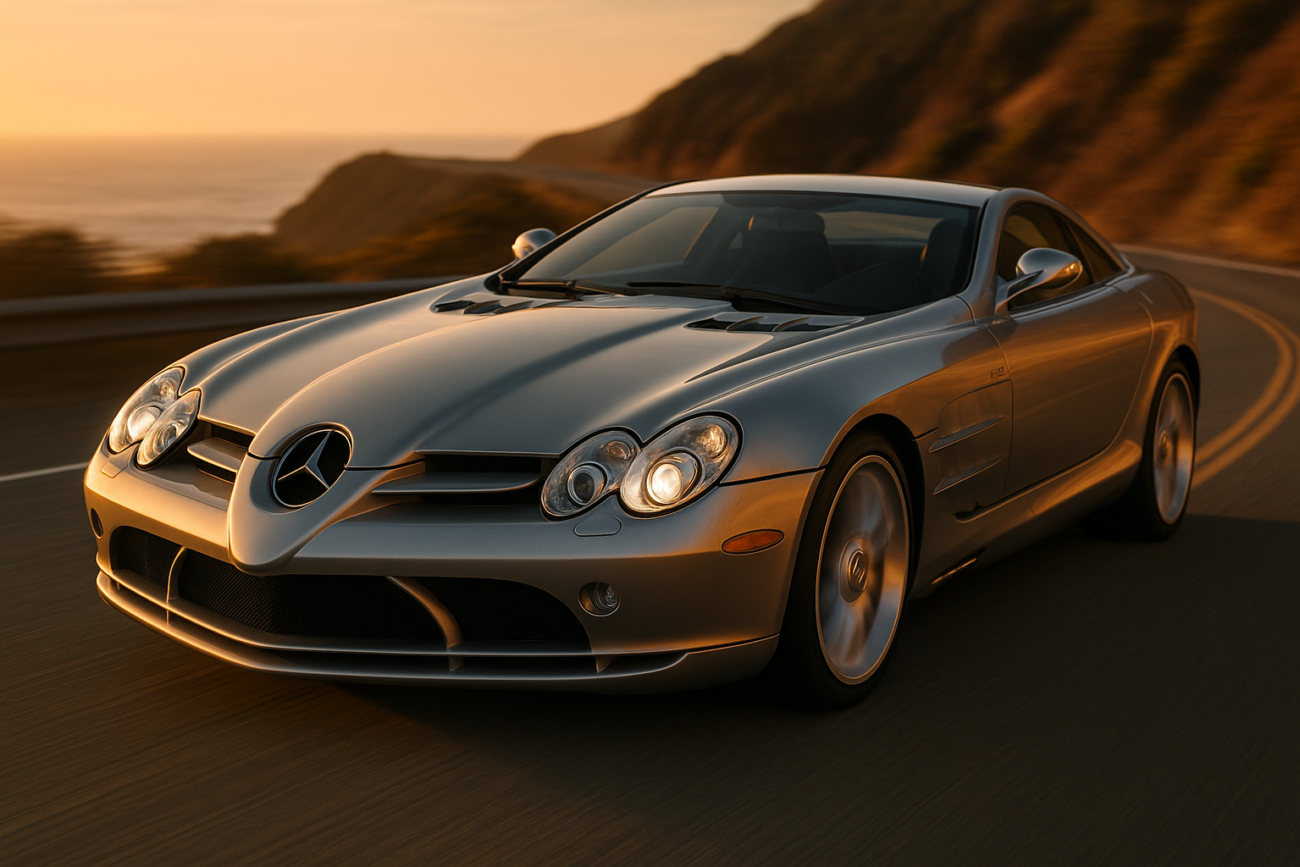
The Mercedes-Benz SLR McLaren is not a garden-variety AMG halo car — it’s a joint-venture supercar hand-built at the McLaren Technology Centre in Woking, England, using a carbon-fiber monocoque tub, a supercharged AMG V8, and a dihedral door design that borrows its swagger from the 300SL Gullwing of the 1950s. It launched for 2004 and the 2005 model year represents the car in its first full production year, before Mercedes and McLaren began adding variants (Roadster, 722 Edition) later in the run.
This is a car bought today almost exclusively as a collector piece or occasional-use grand tourer, not a daily driver. That changes what “buyer’s guide” means here: the questions aren’t just “does it run well” but “can I afford to keep it running, and does this specific car have the paperwork and inspection history to justify the price.”
Generations, Trims, and What Changed
Standard Coupe (2004–2009)
The core car: a 5.5-liter supercharged AMG V8 (based on the M113 architecture) making 617 hp and 575 lb-ft, sent through a 5-speed automatic transaxle with AMG SpeedShift to the rear wheels. Carbon-ceramic brakes and a carbon monocoque chassis were standard from day one — genuinely unusual technology for a production road car in 2004.
722 Edition (introduced mid-run)
Named for Stirling Moss’s 1955 Mille Miglia-winning start number, the 722 Edition brought a power bump, retuned suspension, lighter forged wheels, and a more aggressive interior. It’s the variant most collectors chase, and it commands a real premium over standard coupes — get exact production numbers and year range verified before quoting a spread to a buyer.
Roadster and 722 Roadster (later in the run)
A folding hardtop convertible variant arrived later in production, followed by an open 722 version. Values and rarity here need a current check — roadster variants are less common than coupes but their exact scarcity premium fluctuates with the market.
Stirling Moss (final, ultra-limited)
The run ended with a windshield-less, roof-less track-focused edition built in very small numbers. This is a seven-figure collector piece today and essentially a different buying conversation than the coupe covered in most of this guide.
Engine and Drivetrain: What to Check
- Supercharger and drive belt: The AMG Kompressor system is the mechanical heart of the car’s performance. Have any belt or supercharger service history documented — this is not a component you want surprises on given parts scarcity for a car this specialized.
- Cold starting and idle quality: At least one owner-submitted review flagged real-world drivability complaints on an early SLR. The 2005 Mercedes-Benz SLR is hard to start and runs very rough. The same owner noted I bought it for my wife but she will not drive it because it stalls all the time. Treat this as one data point, not a blanket verdict on the model, but it’s a strong argument for a proper pre-purchase inspection that includes a cold start and idle test, not just a warm test drive at a dealer.
- Front-end shake at speed: The same owner review flagged the front end shakes at about 60 miles per hour — on a car this specialized, front-end vibration at speed could be anything from wheel balance to a tire age issue to something more serious in the suspension or driveline, and needs a proper diagnosis rather than a guess. Any test drive should specifically include a steady 55-65 mph highway pull.
- Fuel system: Confirm fuel pump service history. Get this verified by a specialist before treating it as a known model-wide weak point, but it’s worth asking the seller directly and having a shop check fuel pressure and delivery under load.
