Why the 1992 Diablo Is the One Purists Argue Over
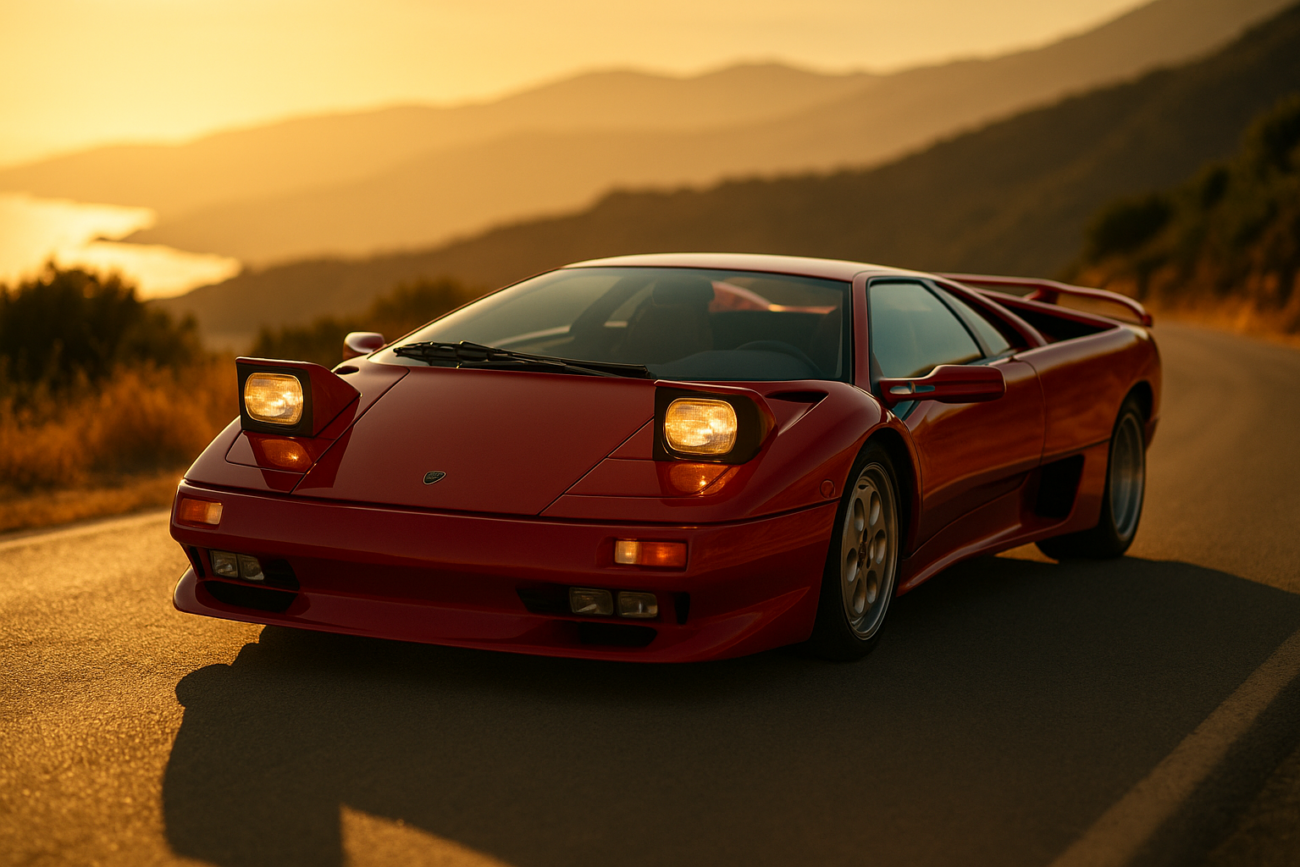
The Lamborghini Diablo replaced the 17-year-old Countach as the fastest, most expensive, and most advanced car the factory had ever built, and the 1992 car sits right at the start of that story. First exhibited publicly at Monaco in January 1990, the Diablo on its arrival was the fastest, most advanced and most expensive Lamborghini ever built, and customer deliveries began in June 1990. A 1992 car is a pre-VT, rear-wheel-drive, five-speed manual coupe — no all-wheel drive, no power steering, no active suspension, none of the electronic aids that arrived from 1993 onward. Collectors increasingly single this era out: as one Lamborghini specialist put it in a recent buying guide, “For the Diablo, it’s the very first batch of 1990s cars that fit this bill,” referring to the earliest examples getting the same reverence Countach LP400 buyers now command.
Generations and Trims — Where 1992 Fits
Understanding the 1992 car means understanding what came after it, because nearly every subsequent Diablo variant was a direct answer to the base car’s shortcomings:
- Diablo (1990-1998), the car you’re looking at: naturally aspirated V12, rear-wheel drive only, five-speed manual, no power steering.
- Diablo VT (1993 on): Lamborghini’s first all-wheel drive production sportscar, retaining rear-wheel drive character but using a computer-modulated system that could direct up to 25% of engine torque to the front wheels in case of rear-axle slip. Classic Trader’s guide notes VT models brought in active suspension and power steering — both absent on your 1992 car.
- Diablo SE30 (1993): 30th-anniversary special edition; a limited run built to celebrate Lamborghini’s 30 years as a car manufacturer, with only 150 examples.
- Diablo SV (1995 on): a simpler and lighter two-wheel drive version introduced to appeal more to the enthusiast driver.
- Diablo Roadster / VT Roadster (1995 on): Lamborghini’s first open-top V12.
- Diablo 6.0 (late-model, post-1998 Audi ownership): revised bodywork with a new lower apron with side air intakes and a twin-exhaust placed in the middle instead of the earlier quad-exhaust, and a larger six-liter V12 developing 543 hp, mated to a five-speed manual.
None of that changes what a 1992 car is: the purest, most analog Diablo Lamborghini sold.
Engine, Drivetrain, and Performance
A 1992 example is powered by the naturally aspirated 5.7-liter DOHC V12 — one specific car listed for sale describes it as a 5.6L DOHC F.I. V12 Engine producing 492 HP, and Lamborghini quoted a top speed north of 200 mph, with the factory later claiming an actual 340 km/h at the Nardo test track against an initial 325 km/h projection for the model generally (take that number with a grain of salt for a stock street car — treat it as a marketing-era claim rather than a repeatable figure). Power goes exclusively to the rear wheels through a five-speed manual gearbox; there’s no power assistance on the steering, and no traction aids. Supercars.net’s history of the car sums up early-press feedback bluntly: the Diablo sold well and was loved by the press, with the only faults being heavy steering and heavy operation of the clutch — expect a workout at low speed and in parking lots, this isn’t a modern hydraulic-assist supercar.
What Actually Breaks — And What It Costs to Fix
Corroborated across multiple specialist sources, four systems dominate the “known issues” conversation on early Diablos:
- Clutch and clutch hydraulics. This is the single most consistently flagged wear item. Clutches are known for having short life spans — the huge torque output puts strain on the internals, and they will require replacement every 18,000 miles, or a lot sooner if driven aggressively; clutch slave cylinders also tend to fail. A specialist buying guide reinforces this from the ownership-cost side: clutch life depends heavily on use, aggressive city driving wears them quickly, and replacement is expensive and not a “while-you-wait” job. Budget for it as a near-certainty over a long ownership period, not a maybe.
- Front suspension hydraulics. Front suspensions can drip hydraulic fluid, often pointing to dirt having entered the system, though the same source notes a fix exists. Have any front-end weeping investigated before assuming it’s cosmetic.
- Brakes. This is a genuinely pre-VT-specific concern worth flagging for a 1992 buyer: brakes in early cars are prone to fade, and were upgraded in the VT and again for the final 6.0-litre models. On a track day or spirited mountain run, a stock ’92 will fade sooner than a later car — factor a brake system inspection and possibly an upgrade into your budget.
- Electrics. Every source we found agrees this is the soft spot of the platform. Electrics are not a strong point in Diablos, so make sure all these systems work as they should, and a separate buyer’s guide adds specifics relevant to early cars: especially on earlier cars, wiring and connectors can corrode or loosen, and window regulators and pop-up headlights need checking. A pre-purchase inspection should specifically cycle every window, both headlight pods, and every warning light multiple times, cold and hot.
- Cooling system. Given the mid-mounted, side-radiator V12 layout inherited from the Countach, radiators, hoses, and fans need to be in top shape, since overheating a V12 is a quick way to ruin the investment.
On the drivetrain’s core mechanicals, the news is better. All Diablo V12s, across the model’s run, are wet sump, interference, chain-drive engines — no rubber timing belt to age out on a schedule, which removes one common supercar money-pit from the equation, though a timing chain problem on an interference engine is still a catastrophic, engine-out repair if it does eventually let go.
Recalls and TSBs
We were not able to confirm a specific NHTSA safety recall campaign tied to the 1990-93 Diablo chassis in the sources available for this guide — the recall activity we could verify related to modern-era Lamborghini models (Gallardo, Huracán, Urus). That absence should not be read as confirmation there’s no open recall on a specific car; the NHTSA’s searchable database coverage for early-1990s low-volume exotics is thinner than for mass-market cars. Run the specific VIN through NHTSA.gov before you buy, and ask the seller directly whether any factory recall or service campaign work is outstanding.
Pre-Purchase Inspection Checklist
Service history matters more on a Diablo than on almost any other 1990s supercar, for a structural reason: service histories can be patchy because there was only one official Lamborghini dealer in the UK for many years, so don’t necessarily expect a full factory-dealer paper trail. The upside, per the same specialist source, is that the Diablo community is small and active, so buyers are bound to run into the last owner, meaning most cars and their mileages are pretty genuine — especially since the cars were always driven sparingly. Before you commit:
- Get a full specialist PPI, not a generic exotic-car shop inspection — Diablo-specific quirks (clutch feel, hydraulic suspension weep, VT vs. non-VT parts) need someone who’s worked on this exact model.
- Verify accident history carefully. Watch out for crashed cars — an inspection is a good idea; body panels and the space-frame chassis are expensive and slow to source and repair correctly.
- Cycle the clutch repeatedly during the test drive and note takeup point, shudder, and slave-cylinder feel.
- Inspect the front suspension for hydraulic fluid weeping.
- Test every electrical circuit — windows, pop-up headlight motors (both sides, repeatedly), climate control, and every warning light.
- Check coolant condition, hose condition, and fan operation; look for any history of overheating.
- Confirm the car is a genuine 1992 rear-wheel-drive, non-VT car and not later parts mixed in — ask for chassis documentation and, ideally, Lamborghini Polo Storico certification or at minimum a documented service history.
- Because the Diablo predates OBD-II diagnostics common on later exotics, a mechanical/hydraulic inspection matters at least as much as an electronic scan.
Values and Market Reality
Lamborghini’s original ask was steep even by supercar standards: the Diablo was presented for sale on January 21, 1990 with a sticker price of $210,000, or roughly $422,000 adjusted for inflation, and the UK launch price was pitched at just under £153,000, making it one of the world’s most expensive cars at the time. Today’s market data is inconsistent enough between sources that we’re flagging exact figures for editorial verification, but the broad picture from currently available listing aggregators shows Diablos — across the full 1990-2001 run — trading with an average sale price around $423,276, with the base-model 1990-1998 cars averaging roughly $328,085. Hagerty’s own overview is worth taking to heart as a philosophy rather than a number: any Diablo offers a thrilling ride, often for pennies on the dollar of what it cost new, but buyers should proceed with caution, as yesterday’s supercars have often led hard lives despite what the odometer might suggest — the best advice is to shop the owner as much as the car.
Running Costs and Ownership Reality
This is not a car you maintain at a chain shop. Expect to budget for annual specialist servicing, with fluids, inspections, and small consumables adding up quickly at exotic-car labor rates. A veteran-owner forum thread on Diablo service intervals lays out a sensible baseline maintenance rhythm even for low-mileage cars: an engine oil change once per year, and flushing coolant, brake fluid, and clutch fluid, plus replacing transmission and differential fluids every two years, with tires, brakes, and ignition components assessed at every inspection given how little mileage these cars typically accumulate. Tires deserve special attention — on a car this powerful and this rarely driven hard, tires often age out before they wear out, so always check date codes rather than trusting tread depth alone. Fuel economy is poor by any modern measure and insurance for an agreed-value policy on a six-figure exotic will not be cheap — budget both into ownership costs realistically, and get current local quotes rather than assuming a number.
The Verdict
A 1992 Diablo is the rawest version of the car Lamborghini ever built under this name: no power steering, no AWD safety net, no active suspension, just a naturally aspirated V12, a five-speed manual, and a body designed by Marcello Gandini before Chrysler-era committee changes softened later cars. That purity is exactly why the earliest Diablos are gaining renewed collector attention. It also means you’re buying the least forgiving version mechanically — heavier controls, shorter-lived clutches, earlier brakes, and the least electronic redundancy in the lineup. Buy on documented history and a thorough specialist PPI, not on price alone, and budget for ongoing clutch, hydraulic, and electrical attention as a normal part of ownership rather than a surprise.
