Why the Dino 246 GT Still Matters
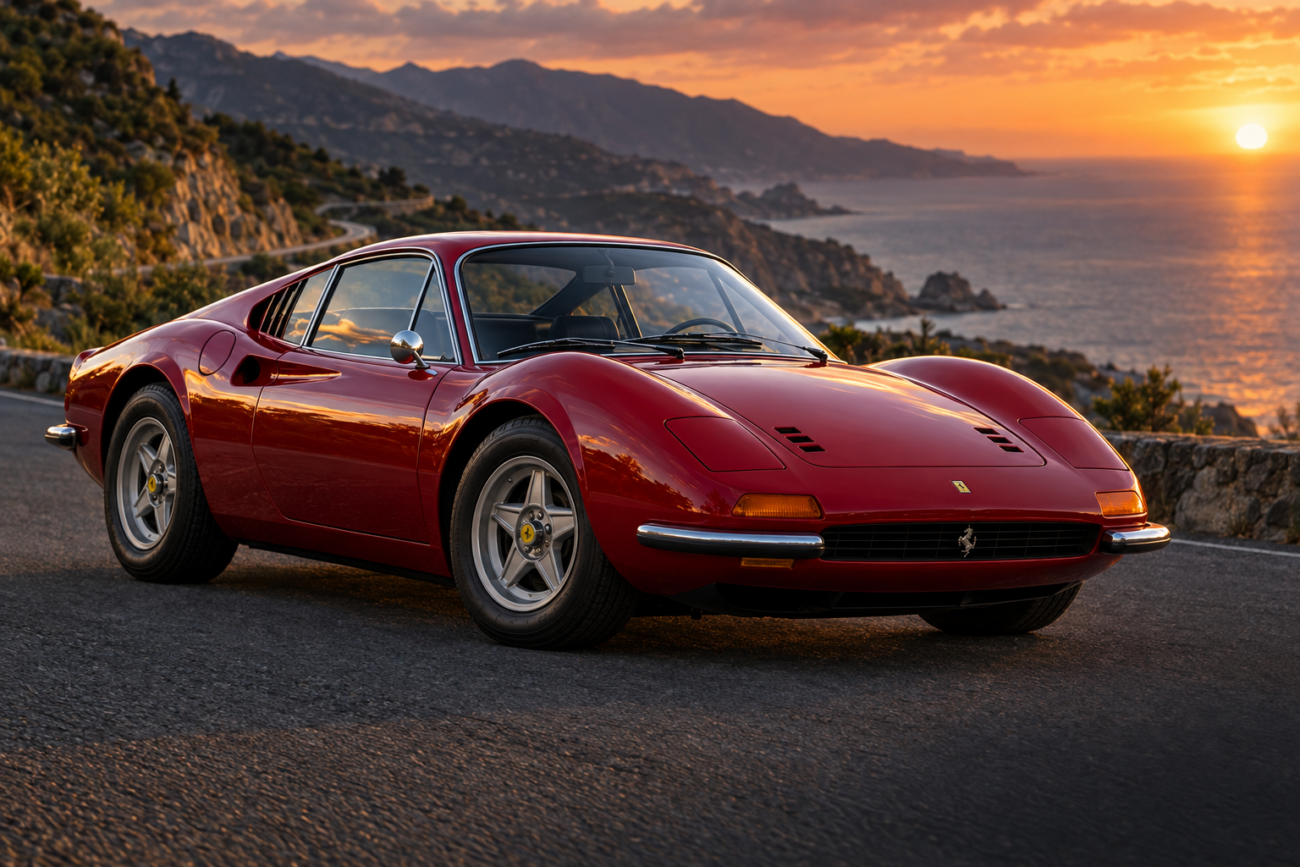
The Ferrari Dino 246 GT occupies a strange and wonderful place in Ferrari history: it wasn’t even badged a Ferrari when new. Enzo Ferrari named the line after his late son Alfredo “Dino” Ferrari, and the car was sold through Ferrari dealers as a standalone “Dino” model, a mid-engine V6 positioned as an affordable, road-focused companion to the front-engine V12 cars. Today it’s recognized as one of the purest expressions of the small-displacement, mid-engine Ferrari idea — the direct ancestor of the 308 GTB and everything that followed in that lineage. A 1972 car sits in the thick of the model’s most developed production run, the so-called “E-series,” which is generally regarded by specialists as the most usable and best sorted version of the 246.
Model History and Generations
The 246 GT succeeded the aluminum-bodied, 2.0-liter 206 GT of 1968, growing the Dino V6 to 2.4 liters and switching to a steel monocoque body (with aluminum doors, hood and decklid on most cars) built by Scaglietti to Pininfarina’s design. Production of the 246 ran from late 1969 through 1974 and is conventionally split into three internal series — L, M, and E — denoting detail changes made along the way:
- L-series (1969-1970): The earliest 246 GTs, closest in detail to the 206 GT, with some trim and interior differences from later cars.
- M-series (1970-1971): A short-lived intermediate run with further detail revisions.
- E-series (1971-1974): The longest and most numerous production run, with the fuel filler relocated, revised window/door hardware, and the Cromodora cast alloy wheel pattern most people associate with the model. A 1972 car will be an E-series example.
The targa-topped 246 GTS (Gran Turismo Spyder) joined the lineup in 1972 alongside the fixed-roof GT, using the same chassis and drivetrain with a removable roof panel rather than a full convertible top — the same formula Ferrari would later use on the 308 GTS. Because the GTS arrived mid-run, a 1972 build date is one of the first years you’ll find both body styles being offered side by side.
Engine, Drivetrain, and Chassis
Every 246 GT uses the transversely-mounted, mid-rear Dino V6: a 65-degree, 2,418cc unit with chain-driven single overhead camshafts per bank (two chains, not belts — an important distinction when researching service intervals), fed by three twin-choke Weber carburetors. Power is generally quoted in the mid-to-high 190s (PS/DIN), sent through a five-speed manual transaxle to the rear wheels. Suspension is independent all around with coil springs and wishbones, and all four corners use disc brakes. There was no automatic gearbox option and no four-wheel-drive variant — every 246 is a manual, rear-drive car, which keeps the ownership proposition refreshingly simple compared to later electronically-complicated Ferraris.
Common Failure Points and Expensive Problems
Rust — the single biggest risk
The 246’s steel monocoque is its Achilles’ heel. Decades of use, salted roads, and poor early restoration practices (heavy use of body filler rather than metal replacement) mean rust is the number one value-killer on this model. Pay particular attention to:
- The rear “sail panels” (the wide C-pillars flowing into the roof) where they meet the rear window surround.
- Floor pans, rocker/sill panels, and the structural box sections beneath them.
- The lower rear valance and the area around the twin fuel filler necks.
- Front and rear inner fenders, battery tray, and the area around the windshield frame.
- Fuel tanks themselves, which sit in the side “saddle” areas of the chassis and can corrode from the inside, especially on cars that sat with old fuel for long periods.
A proper pre-purchase inspection should include a paint-thickness meter run over the entire body to find filler, and ideally the car up on a lift so the floors, sills, and chassis rails can be inspected directly rather than through carpet and sound-deadening.
Engine and fuel system
The timing chains and their tensioners are a known wear item on high-mileage or neglected engines; listen for excessive chain rattle on cold start that doesn’t quiet down once oil pressure builds. The three Weber carburetors need regular synchronization and rebuilding — modern ethanol-blended fuel is hard on old float bowls, needles, and gaskets, and fuel system gumming or leaks are a frequent cause of poor running on cars that haven’t been driven regularly. Oil pressure should be checked carefully warm and at idle; a tired bottom end is a major (and expensive) engine-out repair.
Driveline and electrics
The five-speed transaxle is generally considered robust, but synchros — particularly second gear — can wear and should be checked for clean, quiet shifts when fully warmed up. Clutch wear is a normal consumable item. Electrics (period Marelli ignition components, wiring looms, gauges) are old-Italian-car electrics: generally sound when properly maintained, but a frequent source of nagging gremlins — intermittent grounds, flickering gauges, and tired window regulators — on cars that have been inconsistently cared for.
Recalls and Factory Bulletins
Because the 246 GT predates modern recall record-keeping and was a low-volume, Italy-built car, there is no well-known, well-documented list of safety recalls comparable to what exists for mass-market cars of the era. Treat any claim of a specific “recall campaign” for the Dino with suspicion unless it can be tied to a specific, verifiable factory bulletin — and have a specialist check the car’s documented service history for any factory-authorized updates performed over its life rather than relying on general recall databases.
Pre-Purchase Inspection Checklist
- Numbers matching: Confirm the chassis number, engine number, and gearbox number align with factory records for that specific car — ideally verified through Ferrari Classiche or a recognized marque historian.
- Rust inspection on a lift: Sail panels, floors, sills, fuel tank area, and the lower rear valance, as above — do not rely on a visual inspection of the painted surface alone.
- Compression and oil pressure test: Cold and hot, to assess bottom-end and ring condition before committing.
- Timing chain noise: Listen on cold start and confirm it quiets promptly; persistent rattle suggests tensioner wear.
- Carburetor condition: Confirm all three Webers have been rebuilt or are in good working order, and that the car runs cleanly through the full rev range without hesitation.
- Gearbox and clutch feel: Clean, quiet shifts when warm; a smooth, progressive clutch take-up.
- Service history and ownership chain: Look for consistent servicing by a recognized Dino/Ferrari specialist, ideally with receipts, rather than gaps or unexplained periods of storage.
- Originality of major components: Confirm the engine and gearbox are original to the car (or correctly documented if replaced), and that the body hasn’t been re-shelled or had major structural repair that would affect value and safety.
Which Cars to Be Cautious About
- Any car with heavy filler masking rust rather than proper metal repair — a paint-thickness meter will expose this quickly.
- Cars with non-matching or replaced engines/gearboxes that aren’t clearly and honestly documented — this materially affects both value and collectibility.
- Cars with long periods of inactivity and no documented recommissioning — old fuel, dried seals, and stuck brake components are common after years of storage.
- Cars missing clear ownership and service history, particularly for a model where provenance strongly affects resale value.
- Heavily modified cars (non-period wheels, altered engines, removed emissions-era components) if your priority is a correct, investment-grade example rather than a driver.
Values and Price Trajectory
The Dino 246 GT’s value story is one of the more dramatic in the collector car world: cars that were relatively affordable “entry-level” Ferraris for decades saw sustained appreciation as the broader classic Ferrari market matured, with GTS targa cars generally commanding a premium over fixed-roof GT coupes, and exceptional, well-documented, low-mileage cars trading well above average “driver quality” examples. Exact current price ranges move with the broader classic car market and need to be checked against recent public auction results and specialist dealer listings before publishing a number — treat any figure not pulled from a current source as indicative only, not a quote.
Real Ownership Costs
Running a 246 GT is simpler than running a modern Ferrari — no belts to worry about, no complex electronics — but specialist labor for an older V6 chain-cam engine is not cheap, and a major engine-out service or carburetor rebuild is a job for a marque specialist, not a generalist shop. Parts availability is generally good thanks to a strong aftermarket and reproduction-parts network built up around the Dino’s enduring popularity, but body panels and some trim pieces remain costly, and rust repair done properly (metal, not filler) is labor-intensive and expensive. Budget for specialist storage, climate control, and regular exercise of the car — these engines and fuel systems do not like sitting idle for long stretches.
The Bottom Line
A 1972 Ferrari Dino 246 GT buys you one of the best-resolved versions of arguably the prettiest mid-engine Ferrari ever built — Pininfarina’s shape, a chain-cam V6 that likes to rev, and a chassis that doesn’t punish you the way a V12 Daytona of the same era can on a tight road. The car’s risks are well understood and, with careful inspection, manageable: it’s almost entirely about verifying the body’s structural honesty and the documented history of the engine and gearbox. Buy on provenance and condition first, badge and color second, and insist on a lift inspection before money changes hands.
