Scout Motors just rolled the first vehicles off the line at its two-billion-dollar plant north of Columbia, South Carolina. That sounds like progress until you realize these are validation builds, not customer trucks, and the first actual deliveries won’t happen until 2028.
That’s a four-year gap from the reveal to the driveway, which puts Scout on the same timeline as the Cybertruck. The difference is nobody expected Tesla to hit its dates. Scout was talking about 2026 production before the factory even existed.
The factory is real, the schedule is not
The Blythewood plant is in its final construction phase, with most of the equipment installed and running. Scout’s body shop uses more than 750 robots to weld 160 parts together per vehicle, dropping about 5,000 weld points on each one. AI monitors the welds, metrology systems check the work, and at full speed the line should handle 40 bodies an hour.
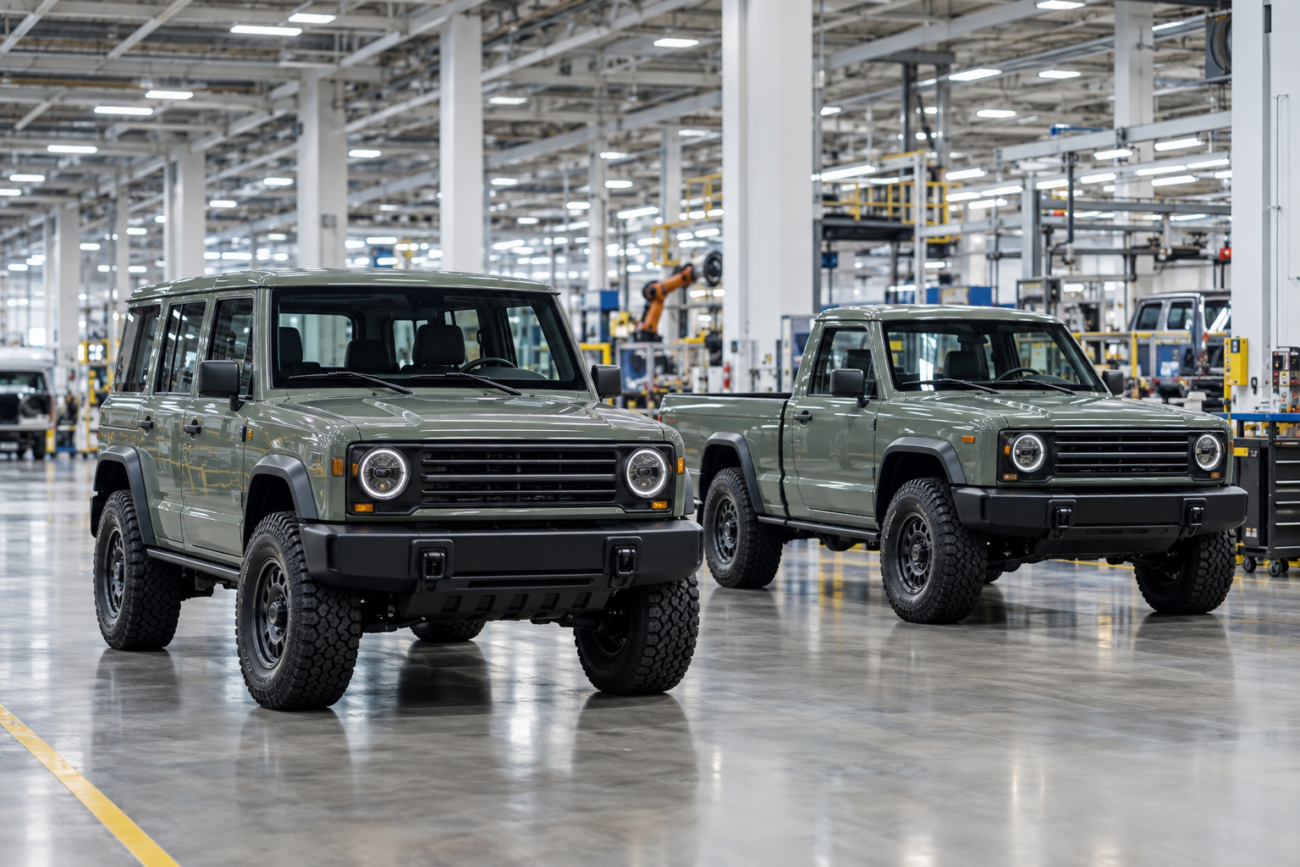
After welding, bodies go through an electrified paint shop, then into final assembly where they meet the chassis and get glass, wiring, seats, and wheels. The company shared photos of a Traveler SUV and Terra pickup sitting inside the building, though the fine print makes it clear those are concept and validation units with optional equipment.
CEO Scott Keogh says what they’re building is no longer a promise on paper, and he’s right. The plant is real. The robots are installed. The validation builds will continue into 2027, followed by pre-production, and then customer deliveries the year after that.
Every reveal pushes it back another year
When Keogh laid out the plan in late 2023, Scout said production would start in 2026. That was still the story when they broke ground in February 2024. By the October reveal, production had moved to 2027. By March of this year, Keogh was saying deliveries would happen sometime in 2028, and that’s now the official line.
Industry forecaster AutoForecast Solutions thinks the Traveler won’t start production until September 2028 and the Terra not until March 2030. Scout hasn’t confirmed those dates, but they haven’t offered tighter ones either.
Part of the delay reportedly comes from adding the Harvester range-extender option, which wasn’t in the original plan. Scout launched as a pure EV brand, then added the gas generator at the reveal. Of the 160,000 reservations Scout has collected, 87 percent are for the Harvester version. Those are $100 refundable reservations, not binding orders.
The market moved without them
Scout was designed for a market that doesn’t exist anymore. The federal EV tax credit is gone. Most of Scout’s own customers picked the gas generator over the battery-only version. And by 2028, Ford, Ram, and Jeep all plan to have range-extended trucks and SUVs on dealer lots.
Scout’s advantage was supposed to be arriving early with a rugged, American-built electric truck that looked like it came from 1978. That edge disappears with every quarter the schedule slips. Validation builds are progress, but they’re the beginning of a long process, not the end. Rivian and Lucid both hit delays going from pre-production to volume production, and they had the benefit of launching into a market that actually wanted what they were selling.
The Traveler and Terra are still two of the best-looking designs in the segment, and 160,000 reservations is a serious number for a brand that hasn’t sold a vehicle in 46 years. But a $100 deposit is easy to walk away from, and three more years is a long time to stay interested in a truck you haven’t driven.
