RM Sotheby’s is rolling into Hershey for its 20th consecutive year as the official auction of the AACA National Fall Meet. I will be there the week of October 7 and 8, walking the swap meet, breathing in burnt oil and fried food, and watching serious money change hands over cars that predate most of our grandparents.
Hershey is not Monterey. The vibe skews older, deeper, less about Instagram and more about whether someone can source you a correct carburetor bowl for a 1911 Stoddard-Dayton. The auction reflects that. This year RM put together a focused roster of veteran and Brass Era machinery, the kind of stuff that draws people who actually know what a splash oiling system is.
The Duesenberg that matters
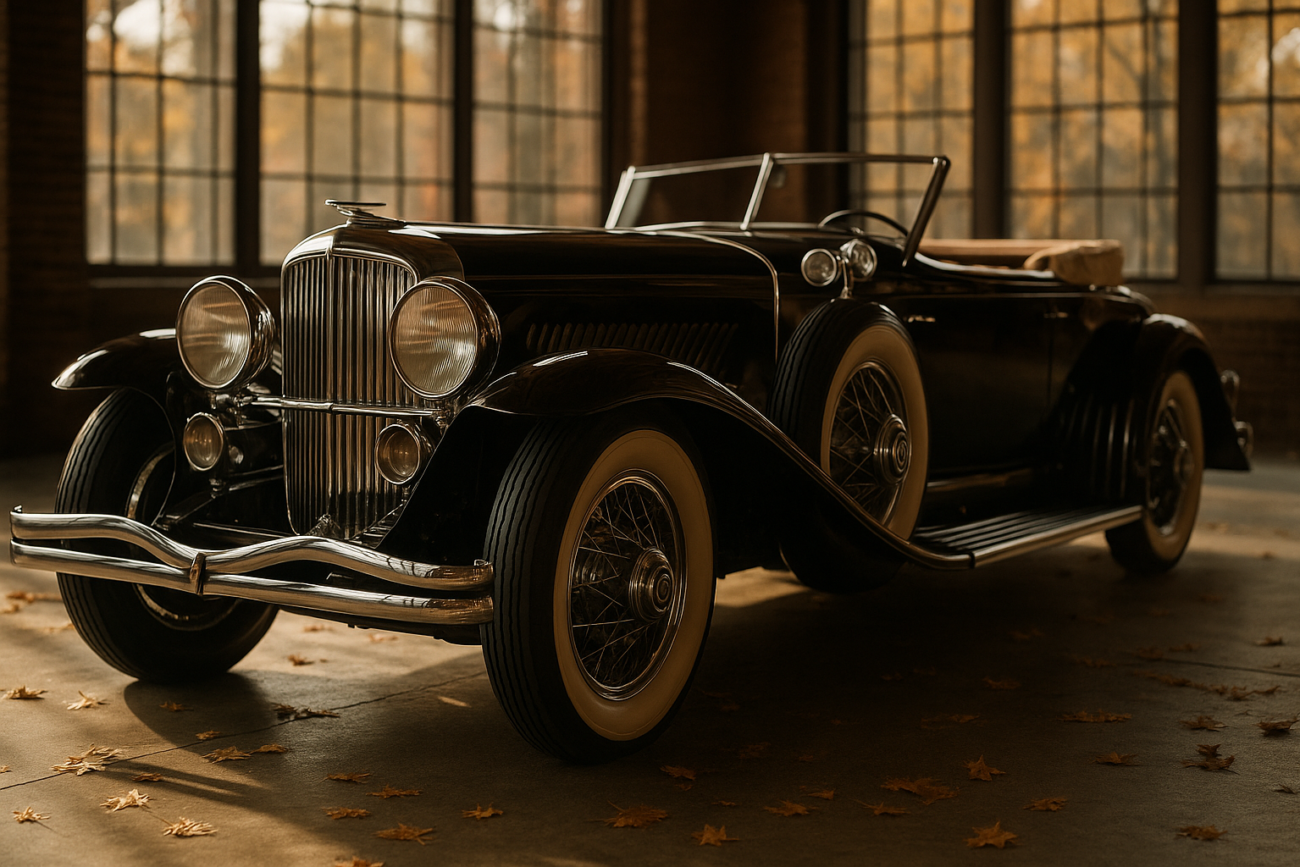
Leading the sale is a 1934 Duesenberg Model J Convertible Berline by Murphy. Close-coupled body, estimated between $900,000 and $1,200,000. Only about five of these Murphys in this configuration are believed to survive. Duesenberg collectors do not mess around, and a Murphy body carries weight. If you have never stood next to a Model J in person, the sheer length and presence will reset your understanding of what a car can be.
Right behind it is the first 1935 Auburn 851 Supercharged Speedster ever produced, carrying an $850,000 to $950,000 estimate. Not just any boat-tail Auburn, but serial number one. Gordon Buehrig designed the 851, and it remains one of the most recognizable shapes in American automotive history. Supercharged straight-eight, outside exhaust pipes, a dashboard that looks like it belongs in a speedboat. You either get it or you do not.
A Mercedes with Hollywood lineage
Then there is a 1915 Mercedes 28/60 HP Town Car and Tourer Display Chassis, estimated at $450,000 to $650,000. This one supposedly belonged to Carl Laemmle, co-founder of Universal Pictures. Brass Era Mercedes are rare enough in the States without a Hollywood connection. The display chassis format means you get to see the engineering, which on a pre-World War I Mercedes is the entire point.
The rest of the catalog runs the gamut from a 1913 Fiat Type 55 Speedster to a 1947 Chrysler Town and Country Sedan nicknamed Big Red, plus a selection of 1950s and 1960s Cadillacs and Buicks for anyone who thinks fins and chrome are more interesting than carburetors the size of lunch pails.
Why Hershey still matters
RM president Gord Duff said it plainly enough. Hershey draws people who actually know this stuff, who care about tiny details and provenance and whether a casting number is correct. The conversations at Hershey do not happen at most other events. Neither does the swap meet, which sprawls across fields and pulls in people hunting parts for restorations that have been underway since the Carter administration.
I have been to a handful of these over the years, and the auction is only part of the week. The real action is in the swap meet at dawn, when the serious buyers are already three rows deep in crates of NOS trim and obscure tooling. If you wrench on anything older than fuel injection, Hershey is worth the trip at least once.
Twenty years is a long time for any auction house to keep showing up to the same event. RM has stayed because the clientele is steady and the cars fit. Pre-war stuff is not a volume game. It is a knowledge game, and Hershey is where that knowledge lives.
